

If your switchboard is tripping unexpectedly, it’s more than just a minor inconvenience; it’s your home’s safety system doing its job. But understanding why it’s happening can help you decide whether it’s a simple reset or time to call an electrician.
We often get calls from homes across Croydon, Lilydale, Bayswater and Ringwood where someone’s been living with persistent tripping for months, sometimes even years. Here’s what you need to know before it drives you mad (or worse — creates a real hazard).
What Happens When a Switch Trips?
Your switchboard is (should be by now!!!!) home to several safety devices. When these detect something dangerous such as excess current, earth leakage, short circuits then they cut the power to stop any further risk. There are three common reasons for this:
1. Overloaded Circuits
Each circuit can only handle so much electrical load. If you’ve plugged in too many appliances — say a heater, hair dryer and kettle all on the same outlet — your breaker will trip to prevent overheating and fire.
This is especially common in older homes where original circuits weren’t designed for today’s load demands. If this keeps happening, we’ll often recommend a switchboard upgrade or at least a redistribution of load across multiple circuits.
2. Earth Leakage (Safety Switch Trips)
Safety switches (or RCDs) trip when they detect even tiny amounts of current leaking to earth. This could mean:
- Faulty appliances
- Moisture ingress (especially in wet areas like bathrooms)
- Degraded wiring insulation
- Damaged extension cords
To find the culprit, unplug everything on the affected circuit and turn it back on. Then plug in appliances one by one until it trips again. If it still trips with nothing plugged in, you likely have a wiring fault.
3. Short Circuits
A short circuit occurs when the active wire touches neutral or earth directly, causing an instant spike in current. This trips the breaker almost immediately and often produces a loud pop or even sparks.
These are serious and need urgent inspection. If you’re seeing this repeatedly, don’t just reset the breaker!
What About Nuisance Tripping?
Sometimes the cause isn’t as clear-cut. Poor wiring from old renovations, non-compliant work, or even faulty LED downlights can cause persistent trips that are hard to track down.
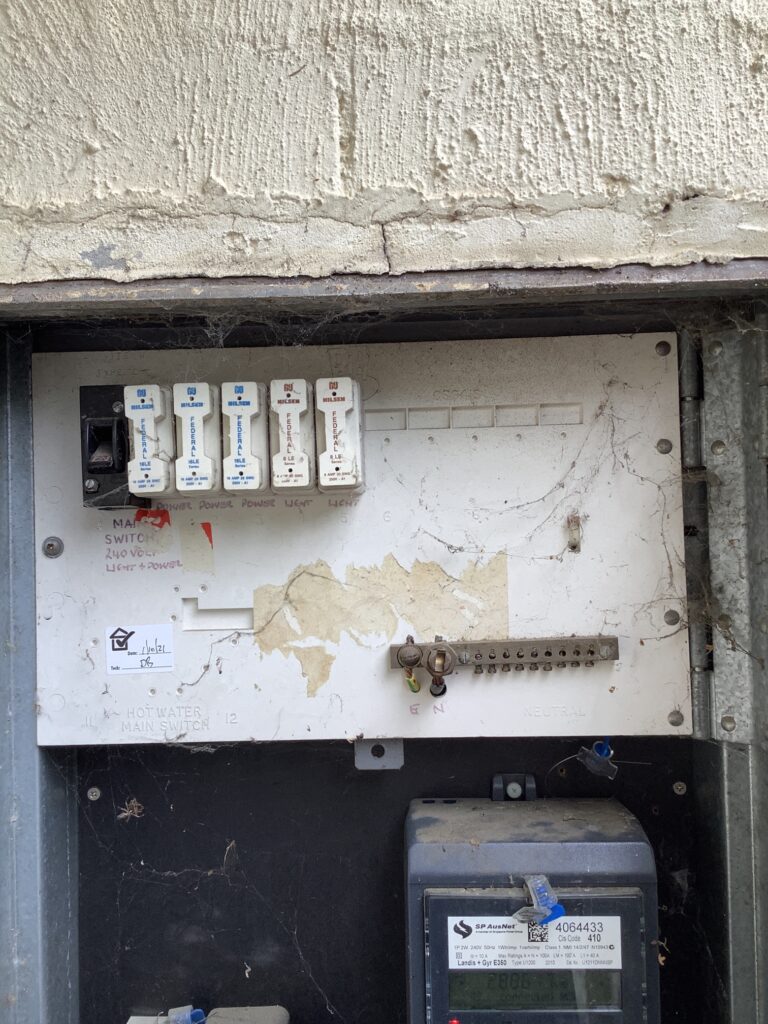
In these cases, a thorough inspection is the only way to properly diagnose the issue. We often find that older switchboards are either missing RCDs completely or have outdated protection devices that no longer function properly.
If you’ve got a switchboard with ceramic fuses or toggle breakers without test buttons, it’s likely overdue for a safety update.
Don’t Just Keep Resetting It
It’s tempting to just flick the switch back on and go about your day — we get it. But constant tripping is a sign that something isn’t right. Your safety switch is preventing possible electrocution. Your breaker is stopping your cabling from overheating. Ignoring it won’t make the problem go away and in many cases, it can make things worse over time.
A Few Things You Can Try Before Calling Us
If it’s a one-off trip:
- Unplug appliances from the affected area.
- Try resetting the breaker or safety switch.
- If it stays on, plug things back in slowly.
If it keeps happening:
- Check for moisture around switches or outlets (especially outdoors).
- Inspect cords for damage or fraying.
- Avoid plugging multiple high-draw appliances into the same outlet.
But if you’ve got repeated tripping, or you see signs of burning or sparking then please stop. It’s time for an inspection.
Call in the Experts
We carry out fault finding and switchboard diagnostics across Melbourne’s Eastern suburbs — including Warrandyte, Mooroolbark, and Ferntree Gully. Whether it’s a quick fix or something deeper, we’ll make sure your system is safe and compliant.
If your switchboard looks like it belongs in a museum, or you’re sick of living in the dark every time you plug in the toaster, get in touch with us. We’ll assess your setup and help you work out whether a repair or full upgrade is needed.
