
The Growing Popularity of Electric Gates in Melbourne
Security, convenience, and a touch of curb appeal; it’s no surprise electric gates are becoming a common upgrade across Melbourne’s eastern suburbs. Whether it’s a sliding gate in Ringwood or a dual-swing setup in Croydon, homeowners are looking for a better way to secure and access their properties without the hassle of hopping out in the rain or leaving the car running in the street.
But there’s one technical decision that often gets skipped over: how the gate motor is powered. Most gates can be powered using low-voltage options (12V or 24V), or full 240V mains power — and the difference matters more than you think.
What Powers an Electric Gate?
There are three main approaches:
- 12V/24V DC Systems: Often come with solar or battery backup kits. Lower power, easier for DIY install, but limited in capability.
- Low-Voltage AC Systems: Similar benefits, used where lighter gates or short duty cycles are expected.
- 240V Mains Power: Drawn directly from your home’s electrical supply — the most reliable and capable option.
We install all three, but for domestic settings, especially in areas with larger driveways, heavier gates, or multiple users, we nearly always recommend a proper 240V feed.
Why Choose 240V?
Here’s why we lean heavily towards 240V installs:
1. Consistent and Reliable Operation
Battery and solar-powered systems can be temperamental — particularly in winter or with lots of daily use. A 240V supply ensures your gate works every time you hit the remote, no waiting, no downtime, no risk of flat batteries when you need it most.
2. More Torque, More Capability
Mains-powered motors are stronger. That means smoother movement on heavier or longer gates, less strain on the motor, and better long-term reliability. This becomes especially important if you have:
- Double swing gates
- Long/heavy sliding panels
- Sloping driveways
- Wind exposure
3. Works With Additional Features
Want to add intercoms, pedestrian release, keypads, lighting, or CCTV integration? A 240V setup makes it easier to support all these extras without straining a limited power supply.
We often install low voltage wiring alongside mains to support gate lights, data cabling, and future accessories — without the need to trench again later.
4. No Solar Panel Maintenance
Solar-powered systems need sunlight, battery replacements, and regular maintenance. They’re suitable for remote properties, but in suburban Melbourne? You’re better off with the mains supply you already pay for.
5. More Resilient to Cold and Rain
Many 12/24V gate systems struggle in colder months — batteries slow down and gate speed drops. 240V systems handle bad weather without complaint, which is a big deal in a place like Warrandyte where the fog rolls in thick and fast.
What’s Involved in Installing 240V to Your Gate?
It’s not just plugging into a nearby outlet. Here’s what we usually do on-site:
- Service Locating: Identify gas, water, NBN and existing electrical paths before trenching — particularly important across driveways or shared access.
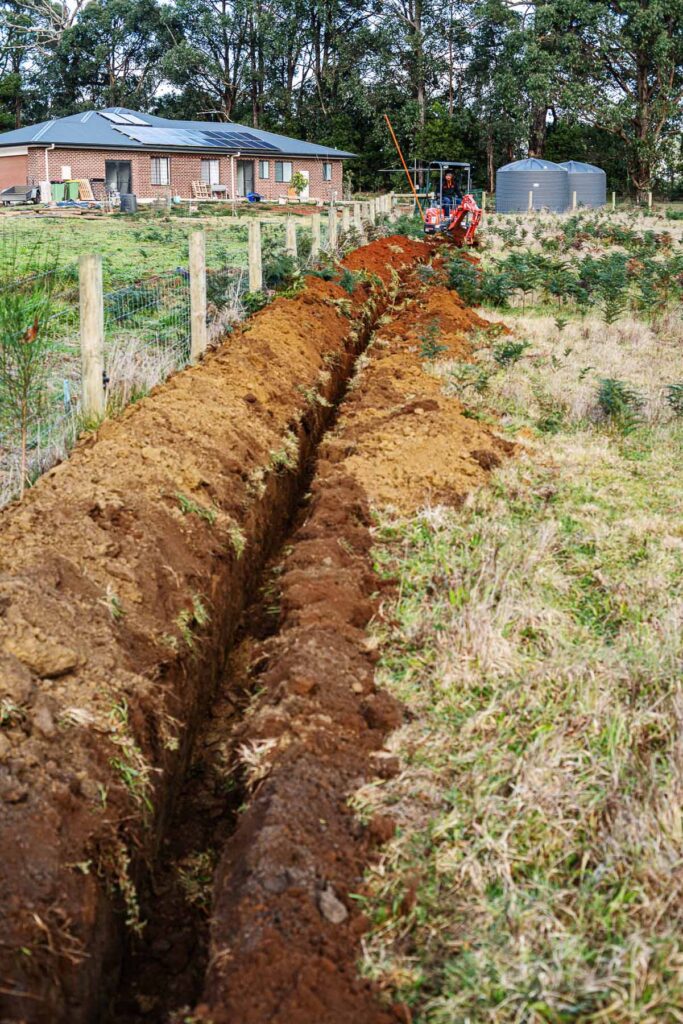
- Trenching: Dig a 500mm deep trench (or shallower with concrete encasement) for safe underground cable runs.
- Conduit + Cable: Run mains-rated cabling in durable conduit all the way to the gate post.
- Gate Post Fitoff: Mount a weatherproof outlet or direct connection inside the post, plus provision for data or low-voltage cabling if needed.
- Switchboard Work: Add a new dedicated circuit, protected by an RCBO, at your switchboard — or assess if a switchboard upgrade is required.
We aim to complete this in a single day where possible, so your driveway isn’t out of action longer than it needs to be.